
Revenue-based funding is priced with a factor rate, not an interest rate.
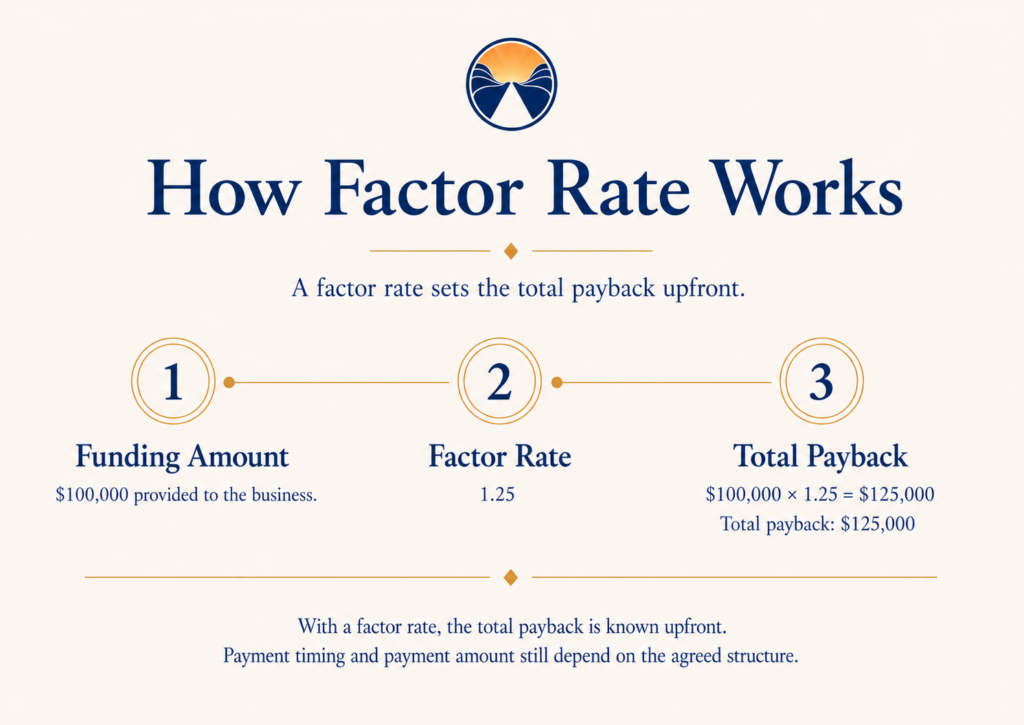
A factor rate tells you the total payback upfront.
An interest rate tells you the cost of borrowing over time, so the final cost depends on the term, fees, repayment schedule, and the outstanding balance
That means a 1.25 factor rate and a 25% interest rate are not the same thing, even though both use the word “rate.”
Factor Rate vs. Interest Rate
Factor rates are simple multipliers. They set the total purchased amount upfront.
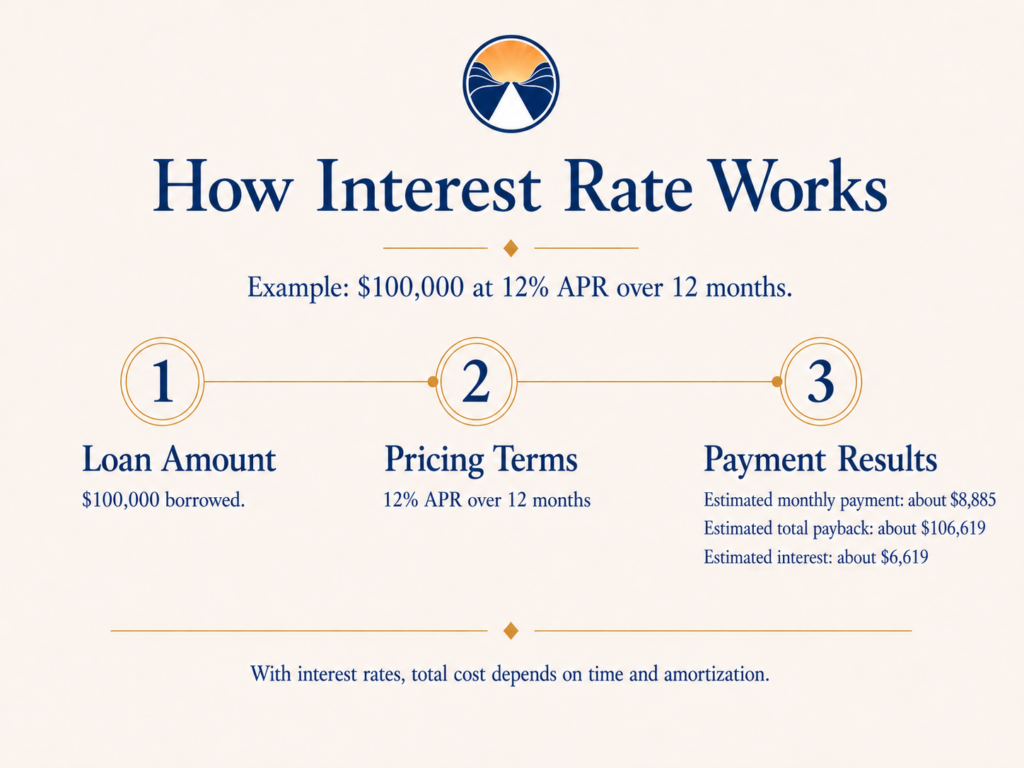
Interest rates are tied to time. The cost of a loan changes based on the rate, the term, fees, repayment schedule, and how long the balance remains unpaid.
Same APR, Different Terms
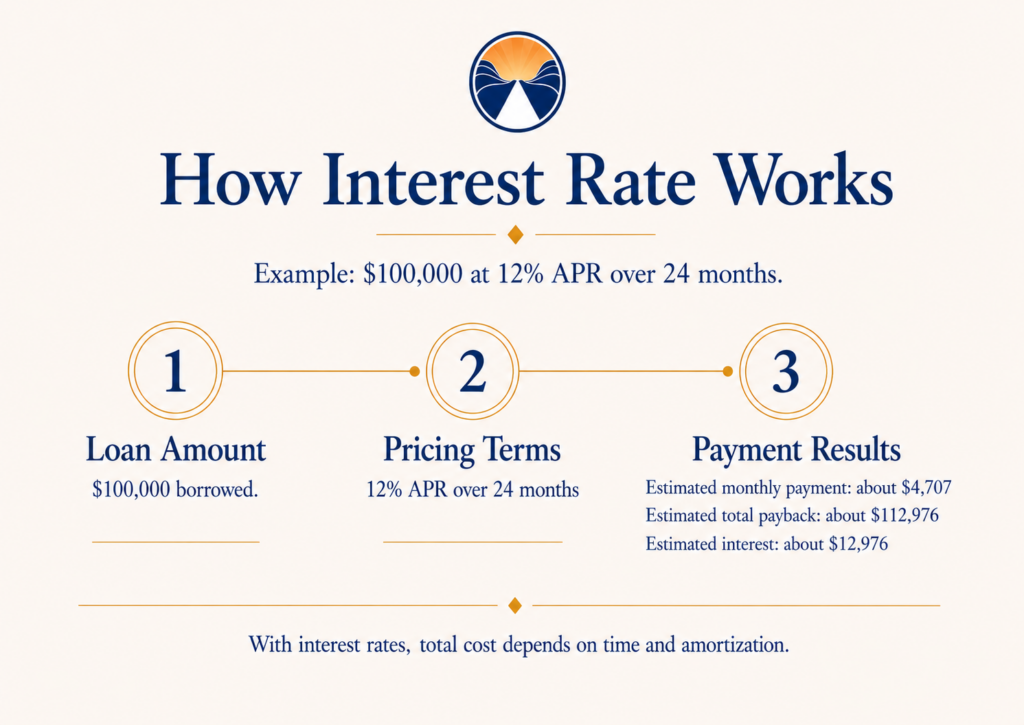
A 12% APR over 12 months does not create the same total payback as a 12% APR over 24 months.
That is the main difference: interest cost depends on time. Factor rate payback is set upfront.
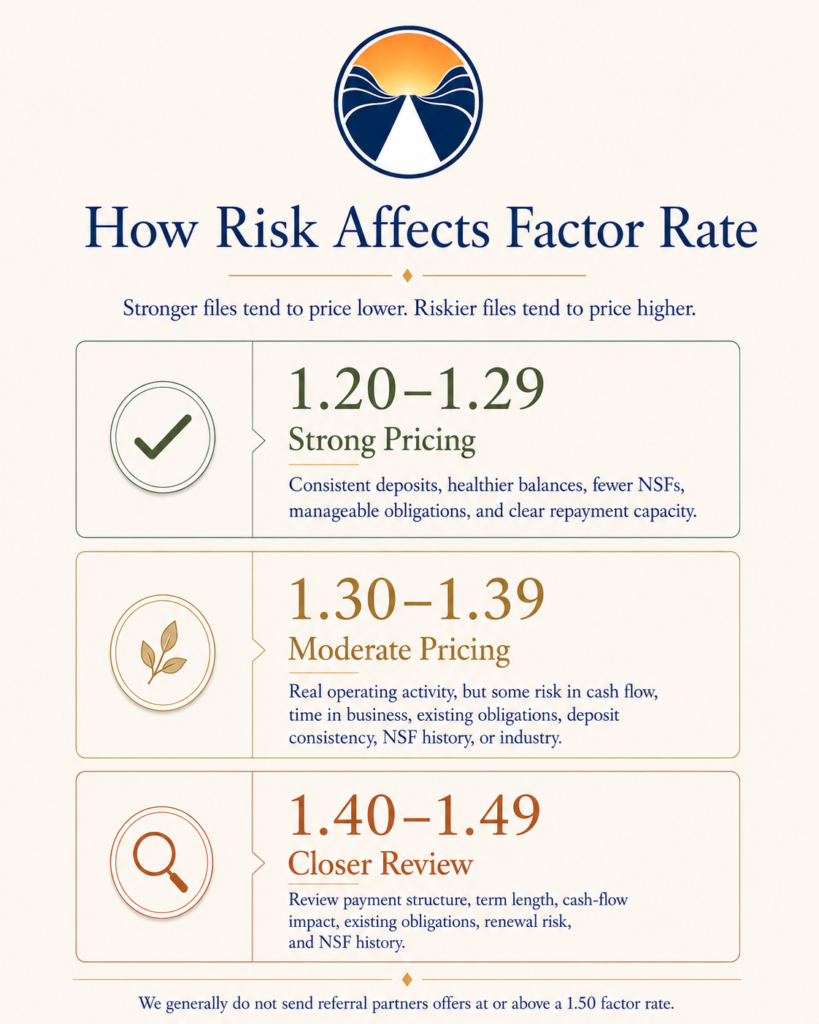
Why Factor Rates Vary
Factor rate is only one part of the offer. Referral partners should also review payment terms, payment adjustments, total payback, existing obligations, and expected cash-flow impact.
Final Note
A factor rate should not be judged in isolation. The right question is not only “what is the rate?”, it’s:
What is the total payback, how are payments collected, can the business handle the cash-flow impact, and does the use of funds justify the cost?